


As concerns about youth mental health continue to grow, researchers and health professionals are examining the role social media may play in rising rates of anxiety, depression, and socioemotional challenges. This article explores the evidence, the debate around restrictions, and practical strategies to help children and teens build healthier relationships with technology.


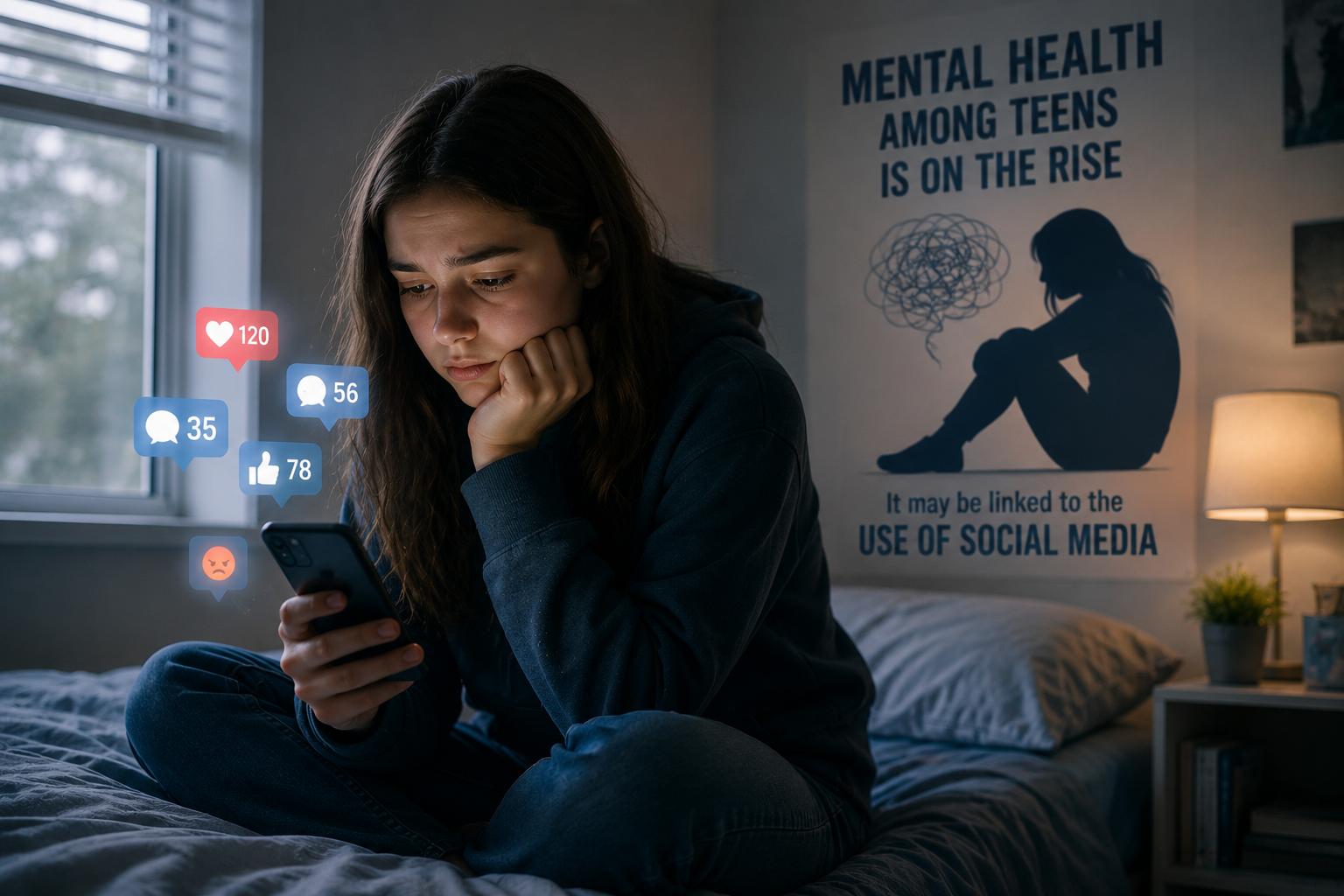
It seems to be common to hear that social media can have a negative impact on mental health. For instance, doctors in Canada, such as those in Manitoba, have received strong support for a ban on social media for children up to age 16. This is due to the fact that the chief public health officer confirmed that the rising depression and anxiety rates in Manitoba are linked to social media use in youth.
Furthermore, the American Psychological Association also found that social media use is linked to the development of "socioemotional problems" in children aged 0 to 10. It is also interesting to note that boys have been found to use social media more often as a coping mechanism for emotional and social stress, whereas girls seem to be developing socioemotional issues due to the usage of social media.
A solution to these issues may lie in education and preventative measures put out by the government, as well as parents and guardians. Moreover, it can be crucial for doctors to suggest removing addictive platform features, such as infinite scrolling, from various social media apps.
Stronger moderation of harmful content, restrictions on advertising for minors, and digital literacy can also help improve safety education for children and youth. The APA also recommends that parents be involved in rule setting, and researchers also note that children "who use screens heavily might need emotional support, not just restrictions. Parents could benefit from programs helping them handle both screen use and emotional problems."
Moreover, the WHO also reports "problematic social media use as a pattern of behaviour characterized by addiction-like symptoms. These include an inability to control social media usage, experiencing withdrawal when not using it, neglecting other activities in favour of social media, and facing negative consequences in daily life due to excessive use."
On the other hand, there are people who are opposed to a ban on social media. For example, some people are skeptical about the province's ability to enforce this ban against major international digital apps and are concerned that any ban could face legal, ethical, or privacy hurdles.
In conclusion, as outlined above, there are various negative consequences associated with social media use, highlighting the idea that limiting the amount of time spent on social media can be beneficial in improving one's mental health.
By Raajan & Arjun Mann


The Deeper Reasons Why Therapy Fails Autistic and Neurodivergent Clients By Dan Spring, RCC, CCC This article explores why many neurodivergent adults leave therapy feeling misunderstood, invalidated, or pressured to conform to neurotypical expectations. Drawing on both lived and professional experience, Dan Spring argues that therapy often fails when it pathologizes neurodivergent traits, over looks a lifetime of social trauma and masking, ignores the diversity of neurodivergent experiences, and lacks genuine understanding of neurodivergent lived experience. The article calls for a shift toward neurodiversity-informed, non-pathologizing practice grounded in expertise, authenticity, and compassion, so that therapy can better support neurodivergent people in building lives that are sustainable, meaningful, and true to themselves.
Read Article
What are the pros and cons of playing video games on mental wellness?
Read Article
Magik Moments Joins MFFS at CNOY 2025! Magik Moments, a Photo Booth Rental in Vancouver will be at this year's Coldest Night of the Year 2025 to capture the fun and memories with their photo booth available throughout the evening from 4pm to 7pm!
Read Article
After many months of poor weather, the climate in Vancouver is finally starting to improve.
Read Article


